Research.
applications
-
Phase Imaging Devices
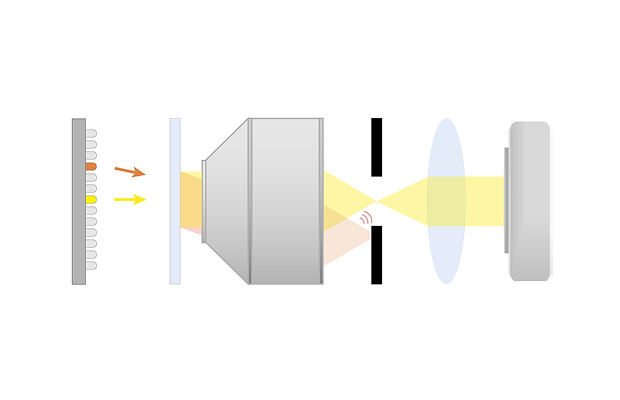
We develop imaging strategies for optical phase microscopy. These methods enable high-resolution large field-of-view label-free imaging of biological cells. We have proposed two designs for computational phase imaging: structured random models to combine robustness and computational efficiency, and perturbative Fourier Ptychographic Microscopy with an LED array microscope.
-
AI for Radiology
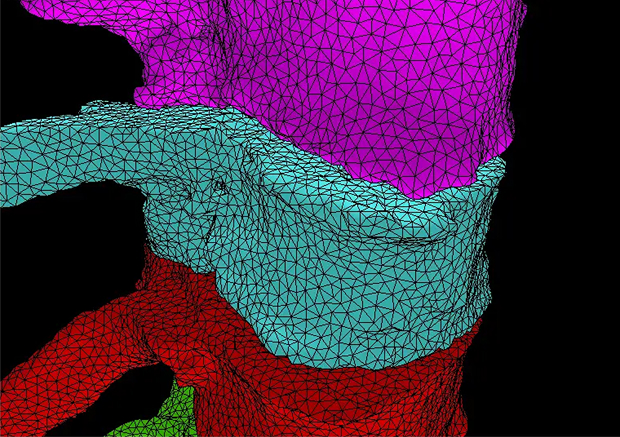
We build machine learning pipelines for automated detection and segmentation in clinical imaging, through collaborations with radiologists. As part of the team behind the PINKCC data challenges, we have tackled ovarian and pancreatic cancer, as well as endometriosis with Hospital Hôtel-Dieu in Paris. With the Segmeridian project, we also develop AI-powered interfaces to streamline the routine of radiologists.
algorithm development
-
Phase Retrieval
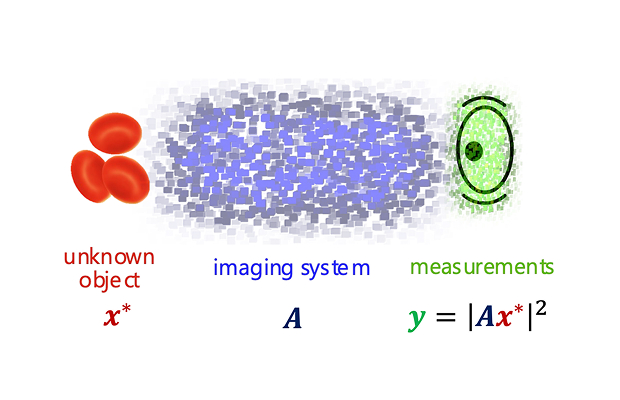
We develop algorithms to recover phase information from intensity-only measurements. The phase retrieval equation arises in across imaging modalities, from phase microscopy to electron ptychography. Through new models and algorithms, theoretical guarantees, or machine learning regularization, our goal is to make phase retrieval as well understood as linear regression.
-
PSF Generator
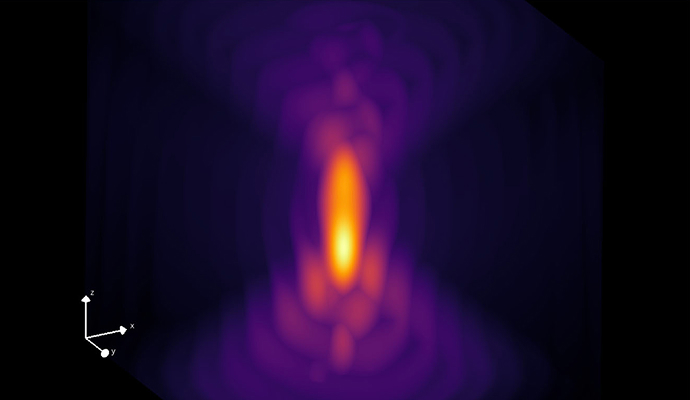
We have proposed psf-generator, an open-source PyTorch library for accurate point-spread-function of high numerical-aperture microscopes. We revisit the theory to unify the different approaches to compute high-NA PSFs. It includes a napari plugin for interactive visualization and enables gradient-based optimization for super-resolution and localization microscopy.
theoretical foundations
-
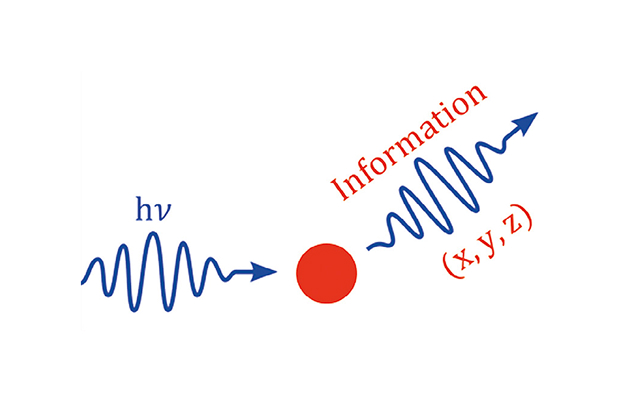
Fisher Information Bounds
We apply the concept of Fisher information to large-scale computational imaging. This framework provides fundamental limits on estimation precision, to quantify how much information can be extracted in the raw measurements. It ensures that practical imaging systems operate near fundamental physical limits, with applications such as phase microscopy, coherent localization microscopy, and MINFLUX.
-
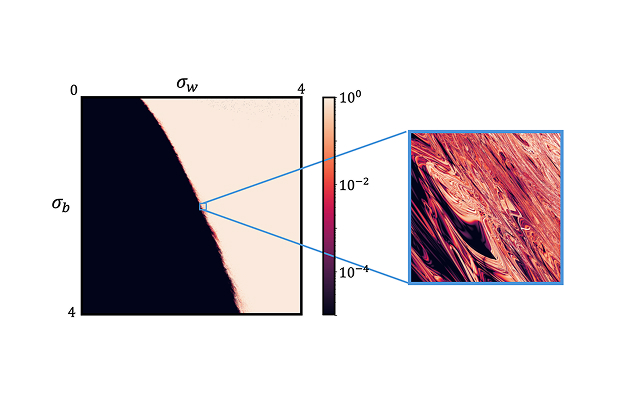
Mean-Field Theory of Neural Networks
We analyze the asymptotic behavior of neural networks to understand their stability and expressivity. This is important when applying them in biomedical applications, as robustness and explainability are essential in clinical settings. We study information propagation and order-to-chaos transitions, revealing how initialization and hyperparameters affect trainability, providing foundations to understand neural network behavior.